Scientific thinking skills for students are the habits of mind that help a child observe, question, and reason like a young scientist, rather than simply memorise facts for a test. These skills include noticing patterns, forming explanations from evidence, and communicating ideas clearly and confidently.
They matter more than ever as your child prepares to leave Primary 6 and move into Secondary 1, where Science splits into Physics, Chemistry and Biology, each taught with greater depth and far less repetition. This guide breaks down the specific skills your child should build now, and how you can support that growth at home before the transition begins.
Key Takeaways
- Scientific thinking skills go beyond memorising facts and definitions.
- Observation and inference skills form the foundation of most Science answers.
- Science process skills are best built steadily during Primary 5 and Primary 6.
- Strong process skills make preparing for Secondary 1 Science far less overwhelming.
- Simple daily habits at home can strengthen critical thinking in Science without added pressure.
What Are Scientific Thinking Skills and Why Do They Matter?
Scientific thinking is the ability to look at information, ask sensible questions, and work out what it means. It is not about knowing more facts than the next student. It is about knowing what to do with those facts.
Many parents notice their child can recite a definition perfectly, yet struggle to apply it to a slightly different question. This is critical thinking in the Science gap, and it is extremely common.
A 2022 study of secondary school Science teachers in Pakistan found something worth noting. Teachers held largely positive views about the curriculum’s ability to build critical thinking, reporting that students could generally understand concepts, apply knowledge to daily situations, and draw conclusions from experiments. However, the same teachers observed that students still leaned heavily on rote memorisation to score well on tests, suggesting a gap between what the curriculum aims to build and what the assessment system actually rewards (Younis, Khan, & Samina, 2022).
Building genuine scientific thinking skills for students early helps close this gap. A child who understands rather than memorises is better placed to handle unfamiliar questions, especially once Secondary school Science introduces three separate subjects with far less repetition.
7 Scientific Thinking Skills Every Child Should Build Before Secondary 1
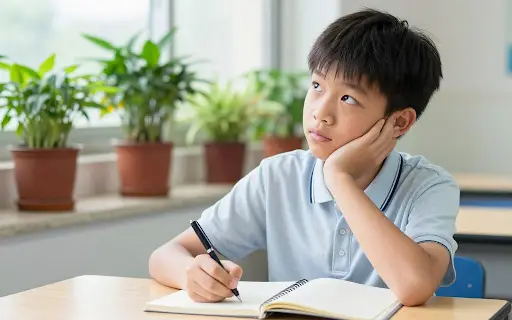
Below are the core science process skills that shape how well a child handles both primary school assessments and the transition ahead.
1. Observation Skills
Observation is noticing details, changes, and patterns without jumping to conclusions too quickly.
At home, this might look like your child noticing that a plant leans towards sunlight, or that ice melts faster on a warm day. Encourage your child to describe what they see using specific, measurable details rather than vague words like “different” or “a lot”.
Observation and inference skills always start here. Without careful observation, the conclusions that follow are often shaky.
2. Inference Skills
Inference is the step after observation. It is forming a reasonable explanation based on the evidence collected, not a guess pulled from nowhere.
For example, if your child notices that plants near a window grow taller than those in a dark corner, a good inference would be that sunlight affects plant growth. A weak inference would jump to an unrelated cause.
This pairing of observation and inference skills is one of the most heavily tested areas in PSLE Science open-ended questions, and it carries directly into Secondary 1 Biology and Chemistry.
3. Asking Good Questions
Curious children ask “why” constantly. The skill is turning that curiosity into a question that can actually be investigated.
Instead of “why is the sky blue”, a more testable question might be “does the sky look the same colour at different times of day, and why might that be”. This shift matters because Secondary Science increasingly rewards structured enquiry over general curiosity.
4. Classifying and Comparing Information
Sorting objects, organisms, or data by shared properties builds a mental structure for new information.
A simple home activity: ask your child to group household items by material, such as metal, plastic, or wood, and explain their reasoning. This kind of sorting strengthens the same logic used in Biology classification and Chemistry states of matter later on.
5. Making Predictions
Predicting means using existing knowledge to anticipate an outcome before testing it.
Before baking, ask your child what they think will happen if you add more baking powder than the recipe states. Let them test it and compare the result to their prediction. This builds comfort with hypothesis-style thinking, a core part of science process skills.
6. Interpreting Data and Results
Many students can carry out an experiment but struggle to read what the results actually show.
Practise with simple bar charts or tables from school worksheets. Ask your child to explain, in their own words, what the data tells them and why. This directly supports exam answers that ask students to interpret graphs or tables, a skill that becomes far more demanding in Secondary 1 Science.
7. Communicating Scientific Ideas Clearly
Knowing the right answer is not enough if it cannot be explained clearly. Critical thinking in Science ultimately shows up in how well a child writes their reasoning.
Encourage your child to explain answers using a simple structure: what they observed, what they think caused it, and why. This habit builds the same explanation skills covered in our Primary 5 Science foundation guide, where structured answering is introduced early.
How Primary Science Learning Builds the Foundation for Secondary 1
Primary science learning is designed to build these skills gradually, starting with simple observation in lower primary and moving towards structured reasoning by Primary 6.
It is worth being clear on one point. Primary school Science does not include Physics or Chemistry as separate subjects. These only appear once your child reaches Secondary 1, taught alongside Biology as three distinct disciplines.
This is why the shift can feel sudden. A child who has only practised surface-level recall may find the pace of Secondary 1 Science difficult, since each subject now covers more ground with far less repetition than PSLE Science allowed.
The table below shows how this progression typically unfolds.
Stage | Focus | Typical Skill Level |
Building core concepts and basic process skills | Foundational observation and simple inference | |
PSLE exam techniques and structured answering | Applied reasoning and data interpretation | |
Secondary 1 | Physics, Chemistry, Biology as separate subjects | Independent scientific reasoning at greater depth |
Students who enter Secondary 1 with strong science process skills tend to adjust faster, because the underlying thinking habits are already familiar. Only the content and pace have changed. For a closer look at this shift, our guide on Secondary 1 Science tuition and the transition after PSLE covers what to expect in the first few months.
How Parents Can Support Scientific Thinking Skills at Home
You do not need a science background to help build these skills. Small, consistent habits make the biggest difference.
- Ask “how do you know” instead of “what is the answer”. This pushes your child to explain reasoning, not just recall facts.
- Turn everyday moments into mini investigations. Cooking, gardening, and weather changes are all natural opportunities to observe and predict.
- Encourage your child to explain concepts out loud. If they can teach it simply, they understand it properly.
- Normalise wrong predictions. A prediction that does not match the result is not a failure. It is useful information.
- Review school worksheets together, focusing on how answers are structured rather than just whether they are correct.
These habits work well alongside structured lessons, since consistent practice at home reinforces what is taught in class.
How Bestminds Academy Supports Scientific Thinking Development
At Bestminds Academy, Science lessons are led solely by Mr Daniel Tay, a former MOE teacher with 10+ years of full-time teaching experience and a former PSLE Science marker. His experience evaluating actual PSLE scripts gives him clear insight into how examiners assess reasoning, not just correct answers.
Lessons follow the OAC Method, short for Observe, Analyse, Communicate. This framework mirrors the exact scientific thinking skills for students covered in this guide, giving students a consistent structure to apply across every topic.
Classes are conducted in a group setting through ClassIn, an interactive online platform where students participate, discuss, and clarify concepts together in real time. This format encourages students to hear different ways of reasoning through the same question, which strengthens critical thinking in Science far more than working in isolation.
The programme is structured to build steadily across the upper primary years, from foundational concept building in Primary 5 to targeted PSLE preparation in Primary 6, giving students a strong base ahead of preparing for Secondary 1 Science.
Frequently Asked Questions
Start Building These Skills With Bestminds Academy
Strong scientific thinking skills for students are not built overnight, but they are built through consistent, guided practice. If your child is approaching Primary 5, Primary 6, or the Secondary 1 transition, structured support now can make the shift ahead far smoother.
🔍 See Our Programs
🧠 Learn Our Methodologies
📚 Read Our Blogs
🏫 Learn About Us
📞 Contact Bestminds Academy
📧 Email: admin@bestmindsacad.com
📱 Call: +65 9365 1228
📍 Address: 170 Upper Bukit Timah Road, Bukit Timah Shopping Centre, #B2-13B, Singapore 588179
🌐 Website: https://bestmindsacad.com
Contact Mr Daniel to check current P5/P6 class availability. A waitlist may be available if your preferred class is full.