Deciding between Primary school Science tuition and self-study is one of the most common questions parents face as PSLE approaches. Both approaches can work, but they suit different children in different ways. Self-study relies on discipline, motivation and existing understanding, while tuition adds structure, feedback and exam-specific guidance that revision alone often cannot provide.
Many parents try self-study first, only to find their child hits a plateau closer to exams. This article compares both approaches honestly, helping you decide what best supports your child’s PSLE Science journey, without guesswork, generic advice or unnecessary pressure.
Key Takeaways
- Self-study works well for children who already grasp core concepts and need practice rather than teaching.
- PSLE Science tuition adds structured feedback and exam technique that self-study alone cannot replicate.
- Signs like plateauing marks or repeated careless mistakes often signal that self-study needs support.
- A Science tutor in Singapore can correct misconceptions early, before they affect exam performance.
- Tuition and self-study are not mutually exclusive. Many students benefit from combining both.
What Self-Study Looks Like for PSLE Science Preparation
Self-study is often the first approach parents try, and for good reason. It costs nothing extra, builds independence, and suits children who are naturally organised. Typical PSLE Science preparation through self-study includes working through assessment books, reviewing school notes, and practising past-year papers.
For some children, this is enough. If your child understands core concepts well and simply needs repetition to remember them, structured self-study can carry them a long way. Consistency matters more than intensity here. A little revision each week tends to outperform long, irregular sessions.
However, self-study has natural limits. Without someone to check their working, a child may practise the same mistake repeatedly without realising it. Open-ended questions, which make up a significant portion of PSLE Science, are also harder to self-assess. A child might feel confident about an answer that would actually lose marks under real exam conditions.
This is not a flaw in the child. It simply reflects what self-study can and cannot do on its own.
What Primary School Science Tuition Adds That Self-Study Cannot
Primary school Science tuition fills the gaps that independent revision often misses, mainly structured feedback and guided correction. A tutor can spot a misunderstanding the moment it appears, rather than after it shows up in a test result weeks later.
Here is a simple comparison to illustrate the difference:
Factor | Self-Study | Science Tuition in Singapore |
Feedback | Delayed, from test results only | Immediate, during practice |
Learned through trial and error | Taught directly and reinforced | |
Consistency | Depends on child’s discipline | Structured weekly sessions |
Correcting misconceptions | Often missed until exam | Identified and addressed early |
Pacing | Self-directed, can be uneven | Aligned to PSLE timeline |
The biggest advantage tuition offers is precision. Science tuition in Singapore is often built around how PSLE Science is actually marked, not just what the syllabus covers. Understanding what examiners look for in an open-ended answer is a skill in itself, separate from knowing the science content.
This is particularly useful for students who understand concepts but lose marks on phrasing or structure, a common and frustrating pattern for many PSLE Science students.
When Self-Study Alone May Not Be Enough
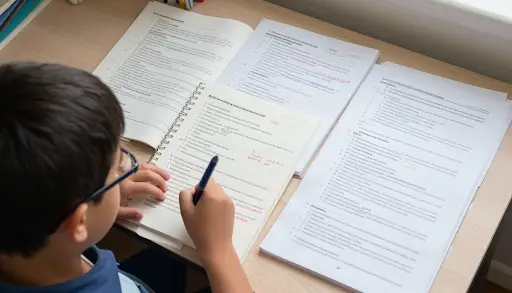
You might notice certain patterns that suggest self-study alone is not moving the needle. These signs are common, and noticing them early makes a real difference.
Watch out for:
- Marks that stay the same over several tests, despite consistent revision
- Careless mistakes that repeat across different topics
- Difficulty explaining answers clearly, even when the concept seems understood
- Frustration or reluctance around Science homework that was not there before
None of these signs mean your child is behind. They usually mean the current approach has reached its limit, and a different kind of support is needed. Recognising this early, ideally before the final PSLE year, gives your child more time to adjust and rebuild confidence.
If these patterns sound familiar, it may be worth exploring what structured PSLE Science tuition looks like before gaps widen further.
How a Science Tutor in Singapore Supports Exam-Ready Thinking
Not all guidance is equal, and the value of a Science tutor in Singapore often comes down to their understanding of how PSLE Science is actually assessed. At Bestminds Academy, Science tuition is led solely by Mr Daniel Tay, a former PSLE Science marker and former MOE teacher with 10+ years of full-time teaching experience. Here is what that experience brings to the classroom:
- Real insight into how answers are marked. Having marked real PSLE scripts, Mr Tay understands precisely how examiners assess open-ended answers and where students commonly lose marks.
- Teaching built around answer structure, not just content. This marking insight shapes how he teaches, focusing not just on what students know, but on how their answers should be structured to score well.
- A focus on understanding over memorisation. His approach centres on helping students understand concepts deeply enough to apply them to unfamiliar questions, exactly the skill PSLE Science rewards most.
- Group-based learning with direct guidance. Classes at Bestminds Academy are conducted as group sessions, allowing students to learn alongside peers while receiving direct guidance from Mr Tay throughout.
- Consistent access through ClassIn. Some sessions are conducted online through ClassIn, an interactive platform that supports consistent learning regardless of location.
This combination of marking experience and classroom background is what separates Primary Science tuition built on real exam insight from generic revision support.
Can Tuition and Self-Study Work Together for PSLE Science?
It is worth stating clearly: tuition and self-study are not opposites. In practice, the strongest results often come from combining both.
Tuition provides the structure, correction and exam technique that self-study cannot offer alone. Self-study, in turn, reinforces what is taught during lessons, giving students the repetition needed to build lasting understanding.
Think of it this way. Tuition sharpens the direction, while self-study builds the mileage. A student who attends structured PSLE Science tuition but also revises independently between sessions tends to retain concepts better than one relying on either approach alone.
This is why Bestminds Academy’s programme is structured progressively across Primary 5 and Primary 6, strengthening core concepts early, then shifting toward targeted PSLE technique as exams approach. It works best as an ongoing foundation, not a last-minute fix, with self-study naturally filling the space between lessons.
Choosing Between Tuition and Self-Study for PSLE Science
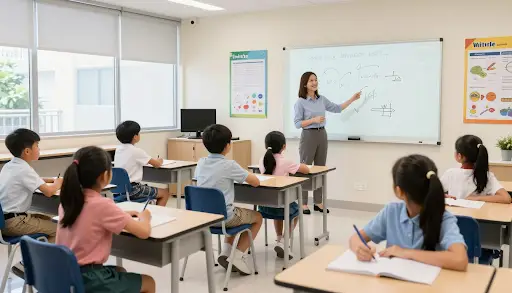
There is no single right answer for every child. The better question is which approach fits your child’s current needs. Before deciding, consider asking yourself the following:
- Are marks improving or staying flat despite regular revision? Flat results often signal a need for outside feedback.
- Does your child understand concepts but struggle to express them clearly? This points to a technique gap, not a knowledge gap.
- Is revision happening consistently, or only before tests? Irregular self-study benefits most from structured support.
- Does your child feel confident asking questions when stuck? If not, guided sessions may help more than independent study.
If most answers point to structure being the missing piece, Primary school Science tuition is likely to help more than continued self-study alone. If your child is progressing steadily and simply needs practice, self-study may still be sufficient for now, with tuition considered later if progress slows.
Frequently Asked Questions
Give Your Child the Support They Need for PSLE Science
Whatever stage your child is at, the goal is the same: steady progress and genuine understanding, not last-minute cramming. If you are considering PSLE Science preparation support, Bestminds Academy’s Science programme, led by former PSLE Science marker and former MOE teacher Mr Daniel Tay, offers group-based guidance built on real exam insight.
🔍 See Our Programs
🧠 Learn Our Methodologies
📚 Read Our Blogs
🏫 Learn About Us
📞 Contact Bestminds Academy
📧 Email: admin@bestmindsacad.com
📱 Call: +65 9365 1228
📍 Address: 170 Upper Bukit Timah Road, Bukit Timah Shopping Centre, #B2-13B, Singapore 588179
🌐 Website: https://bestmindsacad.com
Contact Mr Daniel to check current P5/P6 class availability. A waitlist may be available if your preferred class is full.