

The question arrives in many parent conversations: “When should we start PSLE Science preparation?” The answer is simpler than you think. When to start preparing for PSLE Science is not about waiting until Primary 6. It begins in Primary 5, though the focus looks entirely different.
Mr Daniel Tay, a former PSLE Science marker and ex-MOE teacher with 12 years’ classroom experience, emphasises this distinction. “P5 isn’t about PSLE exam questions. It’s about building the thinking habits your child needs.” Strong foundations in P5 prevent panic in P6. Without them, students rush to catch up. This PSLE Science preparation timeline guide walks you through each phase. You’ll understand what happens when, what to expect, and how to support your child without overwhelm.
Key Takeaways
Before exploring each phase, here’s what matters most:
- P5 focuses on building foundations, not cramming exam content.
- P6 shifts to exam techniques and focused revision work.
- Preparation begins earlier than most parents realise, preventing last-minute stress.
- The PSLE Science preparation timeline progresses steadily across two years, not overnight.
- Early P5 work prevents the panic many families experience in P6.
- Understanding what examiners seek shapes your preparation approach.
- A structured plan reduces student anxiety significantly.
- Consistent weekly effort outperforms intensive holiday cramming.
Phase 1: Early Primary 5 Foundation Building
Your child enters Primary 5. Science lessons introduce new concepts weekly. This phase, spanning roughly the first half of Primary 5, is about building conceptual understanding.
Primary 5 Science preparation at this stage means ensuring your child grasps core ideas. Plant and animal life cycles, basic weather patterns, simple material properties- these become mental anchors for everything later. When students understand why plants need water rather than simply memorising the fact, they can answer almost any plant-related question.
Parent observation: Your child might ask genuine questions about Science. “Why do leaves change colour?” or “How does water go up the plant stem?” These questions signal curiosity, not confusion. Encourage them. Ask questions back: “What do you think happens?”
Avoid PSLE-style questions here. Your child doesn’t need past papers yet. They need familiarity with scientific language and comfort with exploration. Weekly consistent learning, perhaps 3-4 hours focused on school curriculum, is sufficient. The goal is confidence with fundamental concepts.
Phase 2: Mid-Primary 5 Developing Analytical Thinking
Around mid-year, something shifts. Your child has grasped basic concepts. Now comes the harder part: applying them.
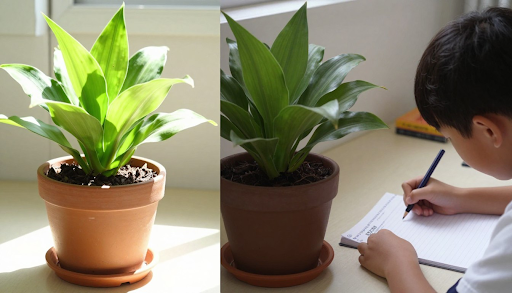
This phase introduces problem-solving. Not “solve this PSLE question” but rather “explain why this happens.” If plants need water, why does a neglected potted plant wilt? If light helps plants grow, why do shade-loving plants exist?
Connecting concepts to everyday scenarios builds analytical depth. Your child starts seeing Science as a system, not isolated facts. This is where the PSLE Science preparation timeline genuinely begins its shift toward examination thinking, though still gently.
Real scenario: Your child notices a puddle disappearing on a hot day. Ask: “Where did the water go?” Let them hypothesise. This everyday observation develops the thinking patterns PSLE examiners reward.
Parent role: Ask “why” questions during ordinary moments. Cooking, gardening, weather watching- science is everywhere. Your questions matter more than worksheets at this stage.
Phase 3: Late Primary 5 Introducing Structured Answers
By late Primary 5, introduce structured answer frameworks naturally. Not as “exam technique” but as “clear thinking.”
The CER approach: Claim, Evidence, Reasoning. Your child states an idea, backs it with facts, and explains the connection. “Plants need sunlight. In our experiment, the plant in darkness grew only 1 centimetre whilst the plant in sunlight grew 5 centimetres. Sunlight provides energy plants use for growth.”
Notice the difference from “plants need sunlight because they do.” Structure transforms a memorised fact into understanding.
Parent observation: Your child’s written responses become more logical. Sentences flow. Ideas connect. This isn’t coincidental; they’re developing habits that examiners reward.
Vocabulary builds naturally too. Scientific terms in context, used repeatedly, become part of your child’s thinking language. Not forced memorisation, but genuine familiarity.
Warning sign: If your child knows facts but cannot explain reasoning, address this now. “Why do you think that?” is your most important question.
Phase 4: Early Primary 6 Transitioning To Exam Readiness
Everything shifts in Primary 6. The focus moves decisively toward Primary 6 Science revision and exam readiness.
This is when your child encounters past-year PSLE questions. Not as tests, but as learning tools. “This is how examiners ask questions. This is what they expect.” The thinking frameworks from P5 now apply to actual examination contexts.
Content coverage accelerates. Your child needs to understand the entire syllabus by mid-P6. New topics appear; previous concepts deepen. Vocabulary expands. Time investment increases from weekly consistency to more targeted focus.
Real milestone: Your child completes their first full-length practice paper under timed conditions. The experience is valuable. They discover their strengths, identify weak areas, and understand examination pressure.
Parent observation: Your child references “open-ended questions” and “structured answers” naturally. They discuss marking criteria. They ask about technique, not just content. This shift signals readiness.
Confidence boost: Students see tangible progress. “I scored better than last week.” Momentum builds.
Phase 5: Mid-Primary 6 Intensive Revision Cycle

Around June onwards, roughly mid-P6, intensive revision begins. This is when PSLE Science exam tips become central to study.
Your child now revises challenging topics with new depth. Electricity, forces, life processes- whatever proved difficult gets targeted attention. Error analysis matters here. Your child reviews past paper mistakes, understands why they occurred, and practises corrections.
The PSLE study schedule tightens. More structured timetables emerge. Your child knows: Mondays focus on Life Processes, Wednesdays on Physical Processes. Consistency accelerates improvement.
Time investment: 5-8 hours weekly becomes normal. Not all cramming, but focused effort. Some sessions involve practice papers. Others involve concept review or error analysis.
Real scenario: Your child struggles with electricity circuits. Rather than abandoning the topic, targeted revision addresses conceptual gaps. Multiple practice questions follow. Confidence gradually builds.
Parent role: Monitor progress. Identify patterns in mistakes. Celebrate improvement. Maintain perspective: examination preparation is marathon pacing, not sprint intensity.
Phase 6: Late Primary 6 Fine-Tuning And Consolidation
Final 2-3 months arrive. Exam confidence builds. New learning largely stops. Instead, consolidation and fine-tuning occur.
Your child revisits previously covered content. Not learning something new, but deepening familiarity. Past papers receive detailed review. Careless errors decrease through repeated practice and heightened attention.
The PSLE Science preparation timeline narrows focus. Breadth of content is known. Depth of mastery becomes the goal. Reducing common mistakes- rushing through answers, missing key details, using imprecise language- happens through targeted practice.
Mock examinations simulate real conditions. Timed papers, examination rules, formal marking. Afterwards, thorough review identifies remaining gaps. Mental preparation begins. Your child visualises examination success.
Parent observation: Your child demonstrates mastery. They explain concepts confidently. They handle application questions with logic. They recognise marking criteria in answers.
Psychological shift: Examination anxiety transforms into examination readiness.
Phase 7: Final Weeks Maintaining Perspective
Two to four weeks before PSLE, intensity peaks differently. This isn’t more intense studying; it’s lighter, sharper, and confidence-focused.
New learning stops entirely. Revision lightens. Your child reviews frequently missed question types, revisits difficult concepts one final time, and practices last-minute technique refinement. But homework loads decrease. Study sessions shorten. Rest increases.
Mental freshness matters now. Exhausted students perform poorly. Your child needs sleep, exercise, and calm.
Parent role: Provide emotional support. Reduce household stress. Maintain normalcy. Your child has prepared well. Trust the preparation.
Real strategy: Reviewing past papers remains valuable, but not memorising answers. Understanding patterns in question types matters more. “Examiners often ask about X in this way. Here’s how we approach it.”
Exam mindset: Confidence comes from preparation, not fear of unknowns.
Understanding The Progression Table
The following table summarises the entire PSLE Science preparation timeline across both Primary 5 and Primary 6. Each phase builds naturally upon the previous work.
Notice how time investment gradually increases. Notice how focus shifts from foundation building to exam technique to confident consolidation.
This progression prevents overwhelming your child whilst ensuring thorough preparation.
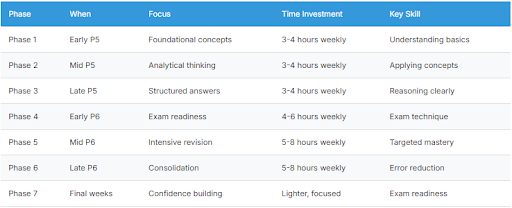
Use this table as your reference guide. Where is your child currently positioned? What should your focus be this month?
The timeline removes guesswork from preparation planning.
