
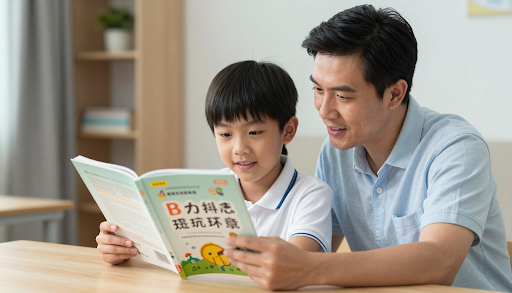
When your child is falling behind in science, panic often sets in. You wonder if there’s still time to recover, whether a science crash course in Singapore can genuinely help, and what the realistic expectations should be. The truth is: yes, targeted intervention can make a real difference. However, not all intensive science tuition Singapore programmes are created equal.
What matters most is the approach and the expertise guiding it, particularly expertise from someone like Mr. Daniel Tay, a former PSLE Science marker and former MOE teacher with 12 years of classroom experience, and whether the focus aligns with your child’s actual gaps. This article explores what a proper PSLE science crash course entails, how it differs from regular tuition, and why timing and methodology determine whether your child can truly catch up before the examination.
Key Takeaways
- A well-structured science crash course in Singapore works best when started within three months of the PSLE examination
- The difference lies not in speed alone, but in targeted concept clarity combined with exam technique training
- Intensive science tuition in Singapore should address specific learning gaps, not blanket coverage of the entire syllabus
- Group-based learning with expert guidance outperforms isolated cramming
- Your child’s confidence matters as much as their knowledge during the last minute science revision
- Success depends on consistent effort, not just classroom hours
Why Students Fall Behind in Science: Understanding the Root Causes
Before exploring how a science crash course in Singapore helps, it’s important to understand why students struggle in the first place.
Science at Primary 5 and 6 levels requires more than memorisation. Your child must understand concepts deeply, how systems work, why certain reactions occur, and how to apply knowledge to unfamiliar scenarios. When this foundational clarity is missing, everything that follows becomes exponentially harder.
Many students fall behind because they’ve been trying to memorise answers rather than truly grasping the science. They can recite what photosynthesis is, but cannot explain why a plant needs light. They know the water cycle exists, but struggle to apply it to a new context presented in an examination question.
Common reasons students fall behind include:
- Conceptual gaps from earlier years that compound over time
- Difficulty articulating scientific ideas in examination-standard language
- Weak problem-solving strategies when facing unfamiliar questions
- Inconsistent practice and revision habits
- Limited feedback on where understanding actually breaks down
- Time pressure during examinations leads to careless errors
The later a student falls behind, the harder it becomes to catch up. This is why last minute science revision requires a focused, strategic approach rather than desperate cramming.
How Intensive Science Tuition Differs from Regular Classes
There’s a significant difference between your child attending weekly tuition and enrolling in intensive science tuition in Singapore designed specifically for catch-up.
Regular weekly tuition typically follows a structured, progressive curriculum. A student attends one or two hours per week, and the tutor covers new topics methodically. This approach works well when a student is keeping pace with school.
PSLE science crash courses operate differently. They compress learning into a shorter, more intense timeframe. However, and this is crucial, compression doesn’t mean rushing. Instead, a proper crash course identifies exactly what your child doesn’t understand, addresses those specific gaps, and then drills the examination techniques needed to convert that understanding into marks.
Group-based learning is another key advantage worth understanding early. In a structured crash course, your child benefits from hearing multiple explanations of the same concept, seeing peers work through the same struggles, and staying accountable in ways solo revision never achieves. This isn’t a compromise, it’s an advantage.
Aspect | Regular Tuition | Science Crash Course |
Duration | Ongoing (6-12 months) | Concentrated (4-8 weeks) |
Focus | Progressive topic coverage | Targeted gap filling |
Pace | Steady, measured progression | Accelerated but focused |
Revision | Integrated throughout | Heavy emphasis from week one |
Exam prep | Gradual introduction | Immediate, intensive |
Student profile | Generally keeping pace | Falling behind or needing acceleration |
The difference matters because a student who is three months from the PSLE cannot afford to spend weeks on topics they’ve already understood. Time must be allocated ruthlessly toward areas of weakness.
What to Expect from a Science Crash Course: A Realistic Picture

Your child will not become a science expert in four weeks. That’s not what a PSLE science crash course promises, nor should you expect it.
What a well designed crash course does provide is clarity on the examination format, targeted skill development, and a realistic roadmap for final revision. Your child will leave understanding not just the science, but also how to demonstrate that understanding under examination conditions.
Here’s what typically happens in a structured crash course:
Week 1 to 2: Assessment and gap identification
Your child’s specific weaknesses are identified through diagnostic questioning and practice questions. Rather than assuming gaps, the tutor listens carefully to how your child explains concepts. A child might say they understand “forces,” but when asked to explain why a moving car takes longer to stop on ice, their confusion becomes apparent.
Week 3 to 4: Targeted concept clarity
The tutor isolates the exact concept confusing and rebuilds understanding from the ground up. Concepts are broken into their simplest components using analogies and relatable examples that your child can grasp immediately.
Week 5 to 6: Open-ended question technique training
Your child practises answering examination-style questions, particularly open-ended questions where phrasing matters enormously. They learn how examiners expect answers to be structured, what key phrases must appear, and how to write responses for maximum marks.
Week 7 to 8: Simulation and final polishing
Mock examinations under timed conditions build familiarity and reduce anxiety. Your child receives specific feedback on remaining gaps and error patterns.
Throughout this process, consistency matters far more than the number of hours. Two focused, well-directed hours weekly beat four hours of unfocused revision every time.
Can Crash Courses Actually Deliver Results? What Research and Experience Show
This is the question every parent wants answered honestly: Does a science crash course in Singapore actually work?
Research in educational psychology indicates that intensive, targeted revision during final exam periods can significantly improve scores (Wangdi & Zangmo, 2021). However, how much your child improves depends on several key factors. These include how far behind the student is, how severe their conceptual gaps are, and, critically, whether they are genuinely ready to invest real effort.
A student who is one grade band below their capability (for example, achieving AL4 when they could achieve AL2) and begins a crash course three months before the PSLE has realistic prospects of bridging that gap. A student who is three grade bands behind, with minimal foundational understanding, faces a much steeper challenge.
What determines success in a crash course:
- Starting point: A student achieving AL5 with a good foundational understanding can improve more readily than a student at AL6 with serious conceptual gaps
- Duration: Four weeks is the minimum. Eight weeks is optimal. Two weeks is unlikely to produce a significant change
- Effort outside class: The tutor can guide, but your child must revise independently
- Specificity: A course targeting identified gaps outperforms generic revision approaches
- Expert guidance: An instructor who understands what examiners specifically look for makes a measurable difference
Research consistently shows that strategic, fast science improvement depends less on raw speed and more on targeted focus. Students improve faster when they address their weakest areas rather than attempting to review everything.
How Bestminds Academy Approaches Science Crash Courses

At Bestminds Academy, the science crash course approach is built on one core principle: understanding, not memorisation.
Mr. Daniel Tay, a former PSLE Science marker and MOE trained teacher with 12 years of classroom experience, brings insider knowledge of exactly what examiners expect. He knows the common misconceptions students hold, the precise phrasing that gains marks, and the error patterns that lose them.
The Bestminds Academy framework for crash courses includes:
Precise concept isolation
Rather than reviewing entire topics, the tutor identifies the specific concept confusing. A student might say they understand “the water cycle,” but their actual weakness might be understanding evaporation specifically, or how human activities interrupt the cycle. The crash course targets that precise gap.
Structured group learning via ClassIn
Classes are conducted through ClassIn, an interactive online platform that keeps students engaged and accountable. Group learning creates an environment where students hear different explanations, see peers working through the same struggles, and benefit from collaborative problem solving.
Open-ended questions and examination-specific language training
Your child learns how examiners expect answers phrased. What seems like a small detail, using the word “evidence” rather than “proof,” or structuring a response as “Claim, Evidence, Reasoning”, can be the difference between an AL1 and an AL3. Mr. Tay’s examination marking experience is invaluable here.
Cumulative progress tracking
Rather than hoping for improvement, Bestminds Academy monitors progress through regular practice questions and mock examinations. Your child sees tangible evidence of improvement week to week, which builds confidence during a naturally stressful period.
Independent Revision: What Happens Between Classes
A crash course is only as effective as the work your child does independently.
During the final weeks of last minute science revision, your child should focus on active practice, attempting questions, identifying what went wrong, and understanding why; rather than passively re-reading notes. Active practice builds learning far more effectively than reading alone.
Your role as a parent is supportive but not instructional. Encourage your child to bring confusion to the tutor, who can address them properly. Supporting your child’s crash course effectively means:
- Ensuring they attend every session (consistency matters enormously)
- Creating a quiet space for independent practice
- Asking them to explain concepts to you reveals gaps
- Avoiding the temptation to re-teach material yourself
- Maintaining realistic expectations about the pace of improvement
- Keeping them hydrated and reasonably rested, cognitive fatigue undermines learning
Confidence Building: The Often Overlooked Component
Science improvement isn’t purely academic. Confidence-building plays an enormous role.
A student who is convinced they’re “bad at science” approaches examination questions defensively. They second-guess correct answers, rush through questions to finish quickly, and freeze when encountering unfamiliar question formats. A student who has experienced genuine understanding, who has felt the click when a concept finally makes sense, approaches examinations with greater composure.
During a science crash course in Singapore, your child experiences repeated moments of clarity. They answer a practice question they previously would have found impossible and suddenly realise they understand it. This matters psychologically as much as academically.
Mr. Daniel Tay’s approach throughout crash courses emphasises building this confidence deliberately. Your child isn’t told “You’re behind”; they’re told, “Here’s what we’re targeting this week, and here’s how we’ll get you there.”
Frequently Asked Questions
Ideally, three to six months before the examination, which for the 2026 PSLE Science paper (29 September) means starting between late March and late June. This window gives enough time to both fill conceptual gaps and build examination technique. Starting six months out allows for proper concept rebuilding under intensive science tuition in Singapore; starting at three months means the focus shifts more heavily toward exam strategies and maximising existing knowledge. Less than two months before the PSLE, a science crash course in Singapore can still reduce careless errors and sharpen open-ended question answering, but the scope for dramatic grade improvement narrows considerably.
No, and attempting to cover everything is one of the most common mistakes in last minute science revision. The PSLE Science paper consistently places heavy emphasis on certain high-yield topics: the circulatory and respiratory systems, electricity, plant processes (photosynthesis, germination), the water cycle, and interactions within ecosystems. For the 2026 cohort specifically, the Cells topic has been removed, and there is now greater emphasis on scientific inquiry and real-world application over rote memorisation. A well-designed PSLE science crash course prioritises these high-frequency topics and teaches students to recognise the specific angles from which examiners question them, rather than providing blanket coverage of the entire syllabus.
Ready to Help Your Child Catch Up in Science?
Bestminds Academy specialises in exactly this: helping students who are falling behind in science regain confidence, understanding, and examination success.
Under the guidance of Mr. Daniel Tay, a former PSLE Science marker and former MOE teacher with 12 years of classroom experience, your child will receive targeted instruction that addresses their specific gaps rather than covering everything. Our science crash course Singapore programme combines conceptual clarity with open-ended question technique training, delivered through interactive group learning via ClassIn.
Beyond our science crash course programme, explore our other intensive science tuition Singapore offerings:
- Primary 5 Science Tuition: Build a strong foundational understanding before the PSLE year
- Primary 6 PSLE Preparation: Intensive exam-focused instruction during your final year
🔍 See Our Programs
🧠 Learn Our Methodologies
📚 Read Our Blogs
🏫 Learn About Us
📞 Contact Bestminds Academy
📧 Email: admin@bestmindsacad.com
📱 Call: +65 9365 1228
📍 Address: 170 Upper Bukit Timah Road, Bukit Timah Shopping Centre, #B2-13B, Singapore 588179
🌐 Website: https://bestmindsacad.com
Limited spaces available for Primary 5 and 6 students. Secure your child’s place with Singapore’s leading primary science specialist now!
